

Do Cavities Cause Bad Breath? What Your Dentist Wants You to Know
You brush twice a day, chew mints after lunch, and still catch an unpleasant smell when you talk to someone close. Before blaming your lunch, it is worth asking a simple question: do cavities cause bad breath?
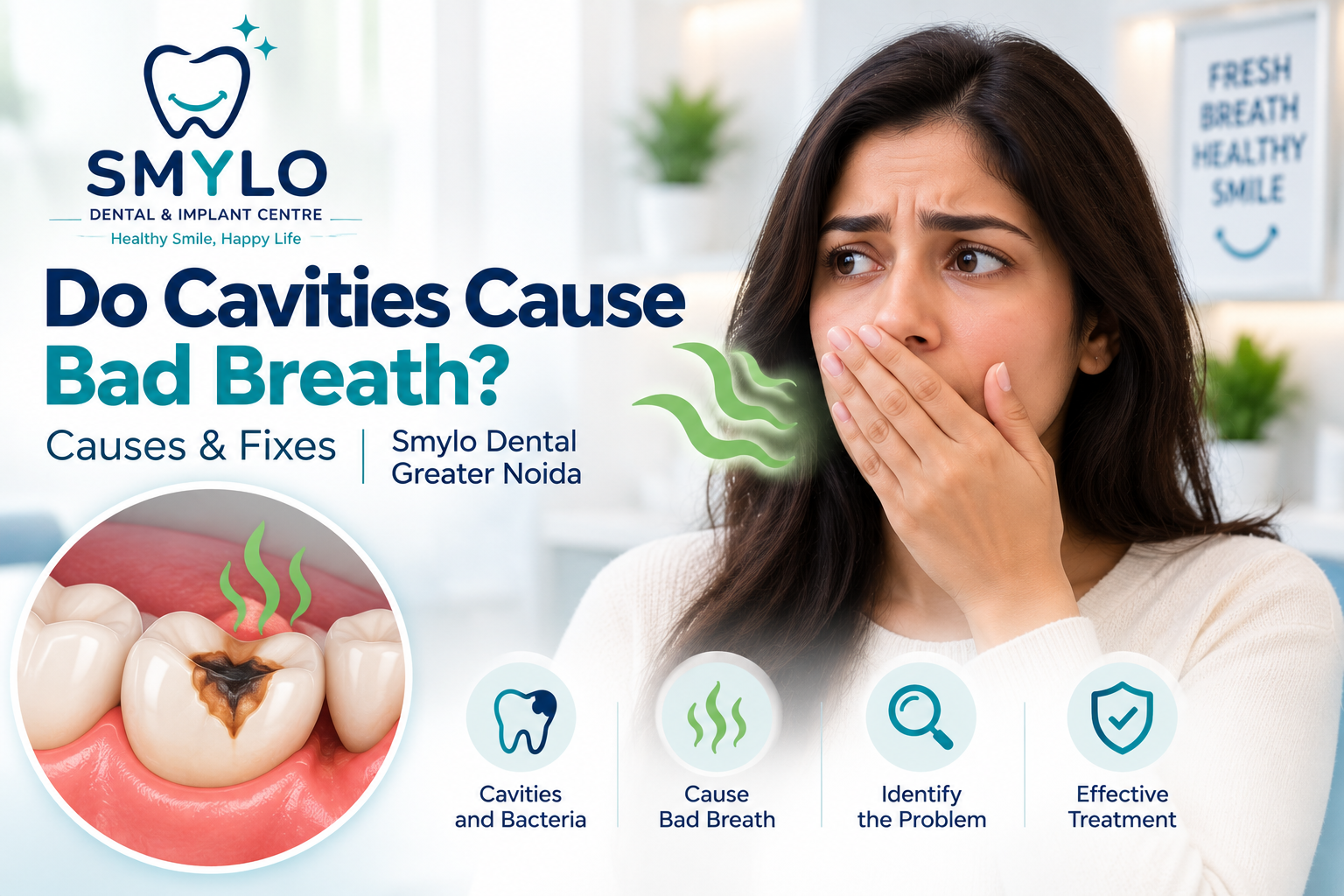
Yes, they can. A cavity is more than just a small hole in the tooth. A cavity is a pocket where food particles and microorganisms accumulate, and the odor coming from it cannot be removed merely by mouthwash.

How Do Cavities Cause Bad Breath?

1. Bacteria thrive inside the hole. Tooth decay occurs when sugar is turned into acid by bacteria, which can penetrate enamel. As the cavity deepens, it becomes a safe haven for those bacteria to multiply, which will produce sulfur gases, the very same substances that cause bad breath problems.
2. Food gets trapped. Rice, roti, chaat and sweets easily lodge in a cavity, especially between teeth. Brushing often cannot reach the bottom of the hole, so the food breaks down slowly and smells.
3. Decaying tooth tissue has its own odour. When decay reaches the softer layers of the tooth, the breakdown of that tissue can add a sour or rotten smell and a bad taste in the mouth.
4. Infection makes it worse. If a cavity is left untreated and bacteria can reach the nerve and cause an infection or abscess. This can bring a strong, persistent odour along with swelling, a pimple-like bump on the gum, or a bitter taste from pus. This stage needs prompt treatment.
Signs Your Bad Breath May Be Coming From a Cavity
- The smell comes back soon after brushing or using mouthwash
- A bad taste that seems to come from one area of your mouth
- Visible dark spots, holes or brown patches on a tooth
- Sensitivity to hot, cold or sweet foods
- Toothache, especially when chewing or at night
- Food that keeps getting stuck in the same spot
If you notice two or more of these, a dental check-up is a better next step than another bottle of mouthwash.
Is It Always a Cavity? Other Common Causes of Bad Breath
Cavities are only one possible source. Your dentist will also look for:
- Gum disease: Plaque and tartar under the gumline cause infection, bleeding gums and a persistent odour.
- Dry mouth: Less saliva means more bacteria. Dehydration, certain medicines and mouth breathing during sleep can all cause it.
- Poor tongue hygiene: A coated tongue holds a large amount of odour-causing bacteria.
- Food and habits: Garlic, onion, strong spices, tobacco and paan or gutkha leave lingering smells.
- Old or leaking fillings and crowns: Gaps around a restoration let bacteria and food collect underneath.
- Medical causes: Sinus infections, tonsil problems, acid reflux and uncontrolled diabetes can also affect breath. If your dentist finds a healthy mouth, a physician can help look further.
How to Fix Bad Breath Caused by Cavities
Mouthwash and chewing gum only cover the smell for a short time. The real fix is to treat the source.
- Fillings: Fillings can be used to treat early and moderate cavities by cleaning and filling the area, thereby ridding it of harmful bacteria.
- Root canal treatment: Root canal therapy may be required if decay has reached the nerve.
- Crowns: Crowns may be necessary for severely damaged teeth to provide stability.
- Extraction: A tooth that is too damaged to save may need to be removed and replaced.
- Professional cleaning: Professional cleaning is the process of getting rid of plaque and calculus that cannot be removed with simple brushing.
Daily Habits That Help Prevent Cavity-Related Bad Breath
- Brush your teeth at least twice daily with your fluoride toothpaste, and for two minutes every time.
- Floss or use interdental brushes daily.
- Remember to clean your tongue every morning.
- Stay hydrated throughout the day, especially after meals and drinks like coffee or tea.
- Try to avoid eating sweets, snacks and drinking sugary beverages.
- Change your toothbrush once every three months.
- Go for a dental visit every six months.
When Should You See a Dentist?
Book a visit if your bad breath lasts more than a couple of weeks, returns quickly after brushing, or comes with toothache, swelling, a bad taste or visible damage to a tooth. Swelling of the face or gum, or fever with a toothache, should be checked as soon as possible.
Get Help for Bad Breath in Greater Noida West

At Smylo Dental & Implant Center, our team finds out whether your bad breath is coming from a cavity, gum problems or something else, and explains your treatment plan and estimate clearly before we begin. Led by Dr. Sandeep Dubey (BDS, MDS), with Dr. Abhishek Dubey (BDS, MDS, PGCOI, periodontology) and Dr. Puja Dubey (BDS, FAM), we focus on comfortable, pain-minimised care for adults and children.
In case your dentist has eliminated oral causes, it is the role of your doctor to identify and treat the issue.
Are you dealing with bad breath? Do not just try covering it up when you can seek professional help? The staff at the dental clinic in Greater Noida West can help you tackle the root of the problem and regain your confidence.
Smylo Dental & Implant Center Royal Nest, Shop No. 15, Near SBI Bank, Techzone-4, Greater Noida West 📞 +91-77660 59891 👉 Book a Free Consultation
FAQs
Can a small cavity cause bad breath? Usually a very small cavity does not smell much, but as it grows and traps more food and bacteria, odour becomes more likely. Treating it early is simpler and cheaper.
Will bad breath go away after a cavity is filled? If the cavity was the cause, the smell usually improves soon after the decay is removed and the tooth is restored. If it continues, your dentist will check for gum disease or other causes.
Can I fix bad breath from a cavity at home? Good brushing, flossing and tongue cleaning help, but they cannot remove decay from inside a tooth. Only a dentist can treat the cavity itself.
Can a cavity cause a bad taste as well as a bad smell? Yes. A sour, bitter or metallic taste can come from a deep cavity or an infected tooth.
This article is for general information and is not a substitute for a dental examination. Please see a dentist for advice about your own teeth.
Book Your Appointment
We'll confirm your appointment at the earliest
 Whatsapp Us