

What is Dental Cleaning and Scaling?
Scaling removes plaque and hardened tartar from your teeth, both above and just below the gumline, where a toothbrush cannot reach. Polishing then smooths the surface so stains and new plaque have less to hold on to. Together they are the most common preventive treatment in dentistry, and the first step in keeping gums healthy.
Signs You Need a Cleaning
- Gums that bleed when you brush or floss
- Bad breath that does not go away after brushing
- Yellow or brown deposits near the gumline
- Red, swollen or tender gums
- Teeth that feel rough to your tongue
- More than six months since your last cleaning
Routine Cleaning or Deep Cleaning: Which Do You Need?
Your dentist decides after checking your gums. Most patients need routine scaling and polishing. Deep cleaning is for gum disease.
| Scaling and polishing | Deep cleaning (scaling and root planing) | |
|---|---|---|
| For | Plaque, tartar and surface stains | Gum disease, deposits below the gumline |
| What we do | Remove deposits, then polish | Clean below the gumline and smooth the root surface |
| Numbing | Usually not needed | Local anaesthesia for comfort |
| Time | About one hour, often less | One to several visits, depending on buildup |
How It Works
Local anesthesia administration
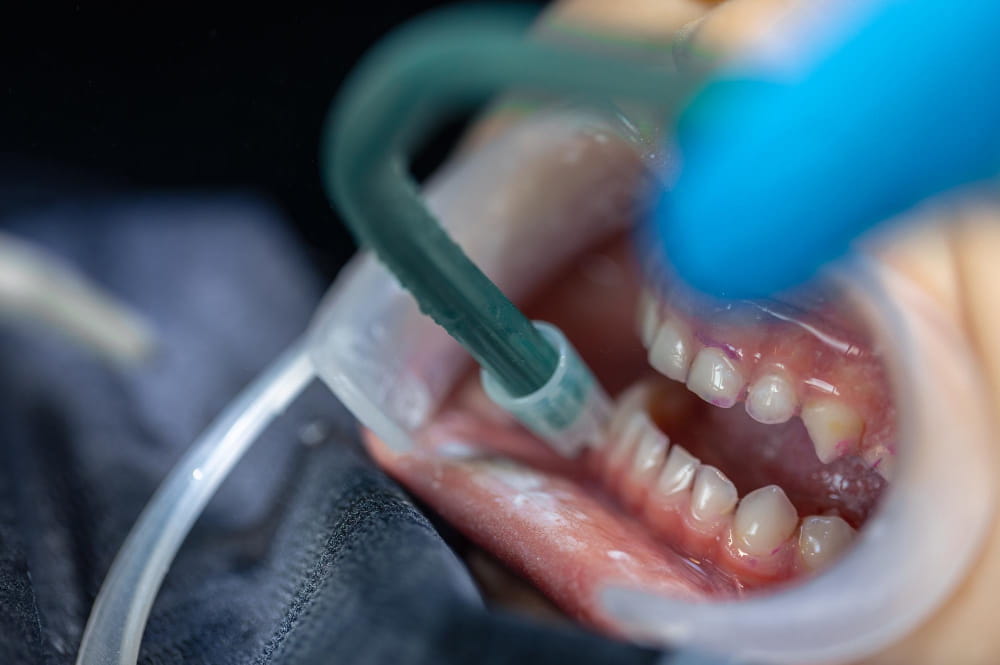
The dentist numbs the area to be treated by injecting a drug. This guarantees a painless treatment through temporary loss of sensation.
Teeth scaling
To eliminate hardened deposits from the gum area and release plaque, scaling is done manually or with the help of an ultrasonic tool. For some people, the treatment ends here.
Root planing
Complete removal of the calcified cementum covering the root and thorough cleaning of the area below the gum line where the diseased bones are located.
Post treatment
The dentist flushes the area to remove any remaining bacteria & applies pressure to ensure healthy gum development.
Benefits of Regular Cleaning
- Healthier gums and less bleeding
- Fresher breath
- A cleaner, brighter look as surface stains come off
- Early spotting of cavities and gum problems
Cleaning does not bleach teeth. If you want a shade change, ask us about teeth whitening.
Why Choose Smylo Dental
- A free consultation before any treatment
- Gum care led by Dr. Abhishek Dubey (BDS, MDS, PGCOI), a senior periodontology consultant with 12 years of experience
- A team of three dentists with 4 to 15 years of experience, including implant, laser and aesthetic dentistry
- A clear price up front, with no surprise add-ons
- One clinic for the whole family, including kids dentistry
After Your Cleaning
Teeth can feel sensitive for a few days. Choose soft foods if they do, and avoid coffee, tea, red wine, cola and tomato sauce for a while, as they stain easily. Brush twice a day and floss once a day.
Frequently Asked Questions
Common questions about Dental Cleaning & Scaling at Smylo Dental.
Yes. If your mouth shows signs of persistent periodontal (gum) disease, your dentist may recommend teeth scaling and root planing. These treatments help remove plaque and tartar, reduce gum disease, and maintain good oral health.
No. Teeth scaling is generally not painful. If required, your dentist may use a local anaesthetic to minimise discomfort. You may experience mild sensitivity after the procedure, which usually subsides within a few days.
No. Dental scaling does not damage your tooth enamel. It removes harmful plaque, tartar, and bacteria from the tooth surface and below the gum line, helping keep your teeth and gums healthy.
A routine scaling and polishing is usually done in one visit of about an hour. Heavy buildup or a deep cleaning can take two to three hours or more than one visit.
Scaling and polishing clean your teeth, reduce gum disease, and help prevent future dental problems. While they do not bleach teeth, removing surface stains can make your teeth appear cleaner and brighter.
Ultrasonic scaling uses a special instrument that produces high-frequency vibrations to break up plaque and tartar. A stream of water is simultaneously sprayed to wash away debris and keep the tooth cool during the procedure.
Avoid foods and drinks that can stain your teeth, such as coffee, tea, red wine, soda, tomato sauce, beets, red cabbage, and heavily spiced foods. Choose soft foods if your teeth feel sensitive after the procedure.
Teeth scaling typically costs between ₹2,000 and ₹3,500 in India. The exact cost depends on the amount of plaque and tartar buildup, the clinic, and whether additional periodontal treatment is required.
 Whatsapp Us