

About Root Canal Treatment
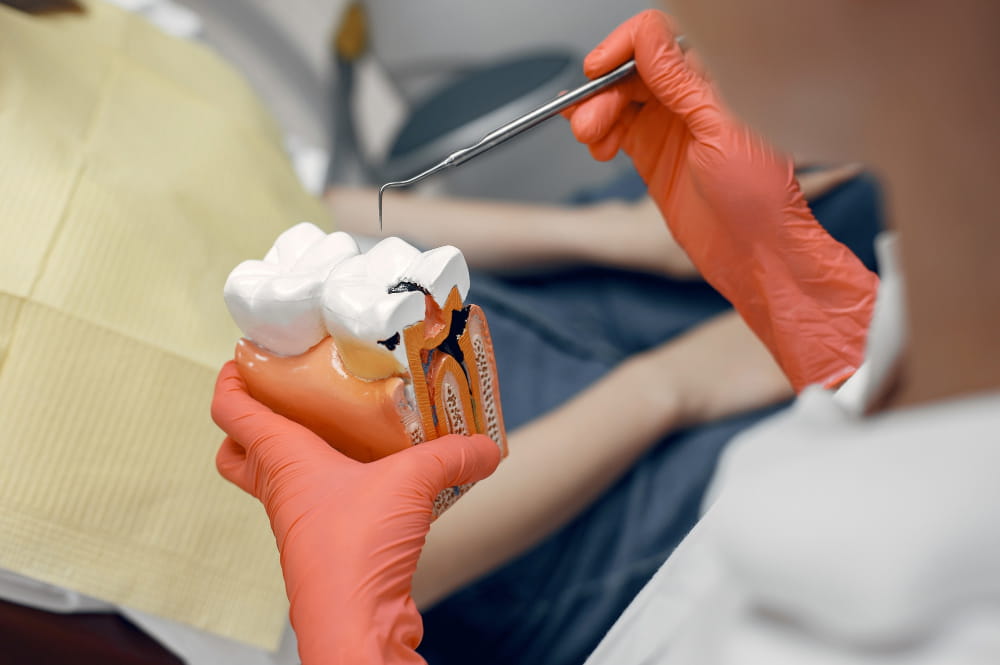
Root canal treatment (RCT) removes the infected or inflamed pulp from inside a tooth, cleans the canals and seals them. It stops the pain and lets you keep your natural tooth instead of extracting it.
Smylo Dental and Implant Center is at Royal Nest, Techzone-4, Greater Noida West. Our team of Dr. Abhishek Dubey, Dr. Dr. Sandeep Dubey and Dr. Puja Dubey treats patients from Gaur City, Noida Extension and nearby societies under effective local anaesthesia. Most cases are completed in 1–2 visits.
Do You Need a Root Canal?
See a dentist soon if you notice any of these:
- Sharp or throbbing toothache, especially at night or after eating
- Lingering sensitivity to hot or cold
- Pain when you bite or press on the tooth
- Swelling, a pimple-like bump or pus on the gum
- A tooth that has turned dark or grey
- A cracked tooth or a very deep cavity
Emergency: If you have facial swelling, fever or difficulty swallowing, visit a dentist or hospital the same day. It can mean the infection is spreading.
Antibiotics and painkillers give only temporary relief. An infected pulp heals only with root canal treatment.
How It Works
Diagnosis & X-Ray
A digital X-ray reveals the extent of infection and the anatomy of the root canals. Your dentist will confirm the diagnosis and explain the treatment plan.
Local Anaesthesia
The area around the affected tooth is thoroughly numbed with local anaesthesia. A rubber dam is placed to keep the area clean and dry throughout the procedure.
Pulp Removal & Canal Cleaning
The dentist creates a small opening in the crown of the tooth and removes the infected pulp. The root canals are then shaped and cleaned using fine rotary instruments.
Sealing the Canals
The cleaned canals are filled with a biocompatible material called gutta-percha and sealed with dental cement to prevent bacteria from re-entering.
Crown Placement
A root canal-treated tooth becomes more brittle over time. A dental crown is placed over the tooth to restore its full strength, function, and appearance.
Single-Sitting Root Canal: Is It Possible?
Many teeth can be treated in one visit of about 45–90 minutes. Whether yours can depends on the tooth and the infection. Your dentist decides after the X-ray.
| Your situation | Usual visits |
|---|---|
| Front tooth, no swelling | 1 |
| Premolar or molar, no abscess | 1–2 |
| Active infection, swelling or pus | 2 or more (infection is calmed first) |
| Re-root canal (old RCT failed) | 2 or more |
Why Save the Tooth?
- A natural tooth chews better than any replacement.
- It keeps the jawbone strong and stops neighbouring teeth from drifting.
- A root canal with a crown usually costs less than extraction followed by a bridge or implant.
- Pain and swelling settle within a few days of treatment.
Is Root Canal Cheaper Than Extraction?
A root canal plus crown often costs less over time than extracting the tooth and replacing it with a bridge or implant. Waiting also raises the cost, because a bigger infection means a harder treatment.
Frequently Asked Questions
Common questions about root canal treatment at Smylo Dental.
No. Modern root canal treatment is performed under effective local anaesthesia. Most patients are surprised by how comfortable the procedure is. The pain you feel before treatment — from the infection — is far worse than the treatment itself.
Most cases at Smylo Dental are completed in 1–2 appointments. Complex cases with multiple canals or severe infection may require an additional visit. Your dentist will advise you at the consultation.
Antibiotics treat the acute infection temporarily but cannot eliminate the infected pulp tissue. Without treatment, the infection will return, spread to surrounding bone, or lead to abscess formation — potentially requiring extraction.
In most cases, yes. Root canal-treated teeth lose moisture over time and become more prone to fracture. A crown protects the tooth and restores its full function. Your dentist will advise whether a crown is necessary for your specific tooth.
Mild tenderness for 2–3 days following treatment is normal and manageable with over-the-counter pain relief. Most patients return to normal activities the same day or the day after treatment.
Wait until the numbness is gone, then eat soft, lukewarm food. Avoid hard or sticky food on the treated side until the crown is fitted.
No. Antibiotics control the infection for a short time but cannot remove the infected pulp. The pain and infection usually return.
The infection can spread to the bone and gum, form an abscess and finally make extraction necessary. Early treatment saves the tooth and costs less.
Yes. It is a standard, widely used dental procedure. Claims that it causes other diseases are not supported by scientific evidence.
 Whatsapp Us