

About Dental Implants
Missing a tooth? A dental implant replaces it from the root up, so you can eat, speak and smile without a plate slipping or a bridge grinding down healthy teeth. At Smylo Dental in Greater Noida West, Dr. Abhishek Dubey, Dr. Sandeep Dubey and Dr. Puja Dubey plan every implant on a 3D CBCT scan, so placement follows your bone and gums, not guesswork.
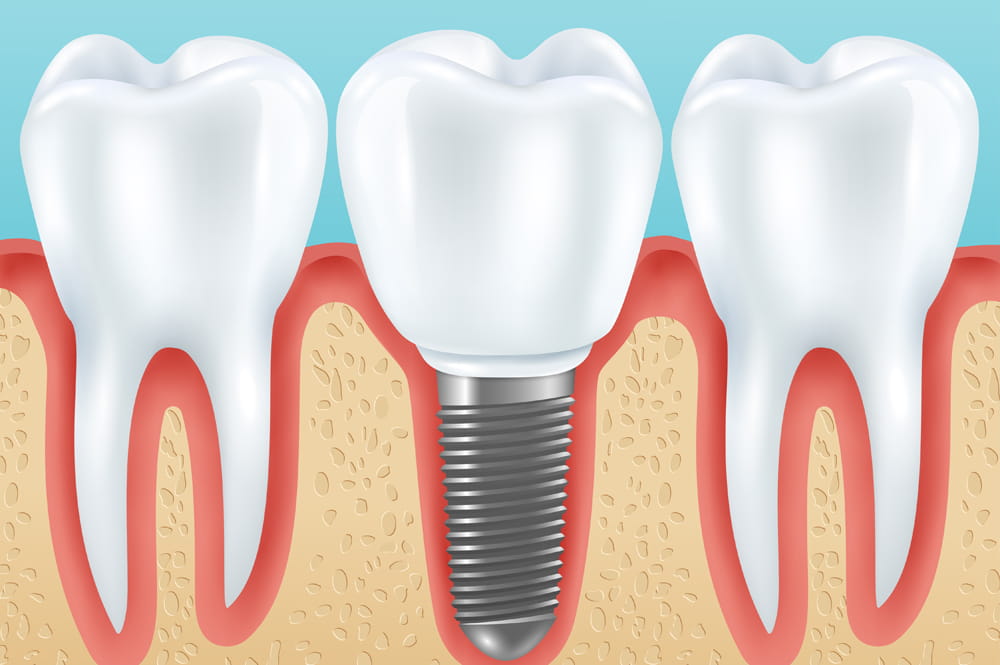
A dental implant is a small titanium post that goes into the jawbone and acts as an artificial tooth root. Over a few months the bone fuses with the post. A custom porcelain crown is then fixed on top, matched to the shade and shape of your own teeth. Because the root is replaced too, an implant feels and works like a natural tooth.
Why Replace a Missing Tooth?
A gap is more than a cosmetic problem. Left untreated, it can lead to:
- Difficulty chewing and unclear speech
- Neighbouring teeth drifting into the gap and a bite that no longer meets properly
- Jawbone shrinking where the root used to be, which can make the face look sunken
- Higher risk of decay and gum disease around the gap
- Loss of confidence, with many people hiding their smile
Teeth are lost to decay, gum disease, injury, failed root canals or extraction. Whatever the cause, replacing the tooth early keeps the surrounding bone and teeth in better shape.
Dental Implants vs Bridges vs Dentures
| Feature | Dental Implant | Dental Bridge | Removable Denture |
|---|---|---|---|
| Replaces the root | Yes | No | No |
| Needs neighbouring teeth filed down | No | Yes | No (but clasps may grip them) |
| Protects jawbone from shrinking | Yes | No | No |
| Fixed in the mouth | Yes | Yes | No, taken out daily |
| Cleaning | Brush and floss like natural teeth | Special floss under the bridge | Soak and clean outside the mouth |
| Typical lifespan | Many years with good care | Often 10-15 years | Needs relining or replacing over time |
Bridges and dentures still suit some patients. Your dentist will tell you honestly which option fits your mouth, health and budget.
Types of Dental Implant Treatment
- Single tooth implant: one implant and one crown for one missing tooth.
- Multiple teeth (implant-supported bridge): two or more implants carry a bridge, so you do not need one implant per tooth.
- Full arch (All-on-4 / All-on-6): four to six implants support a complete fixed set of teeth for an entire jaw. Suitable when most or all teeth are missing.
- Bone graft or sinus lift: if the jawbone is thin, bone can be built up first so the implant has firm support.
Dental Implant Procedure, Step by Step
- Consultation and 3D scan. Your dentist examines your teeth and gums and takes digital X-rays and a 3D CBCT scan to measure bone height, density and nerve position.
- Treatment plan. You are told the number of implants, the steps involved and the likely timeline before anything begins.
- Implant placement. Under local anaesthesia, the titanium post is placed in the jawbone. Most patients describe pressure rather than pain. A temporary tooth can be fitted if needed.
- Healing (osseointegration). Over about 3 to 6 months the bone grows around the implant and locks it in. You return for short check-ups.
- Abutment. A small connector is attached to the implant and the gum heals around it.
- Final crown. Impressions are taken and a custom crown is made, then fixed in place. Your dentist checks your bite and fit.
Total time is usually 4 to 8 months, most of it healing. Some cases suit faster protocols; your dentist will say if yours does.
Who Is a Good Candidate?
Most healthy adults with a fully grown jaw can have implants. You are more likely to qualify if you have:
- Enough jawbone, or are willing to have a bone graft
- Healthy gums, or gum disease treated first
- Good oral hygiene and regular check-ups
These need extra evaluation before treatment: uncontrolled diabetes, heavy smoking or tobacco chewing, active gum disease, radiation to the jaw, and some long-term medicines. If you are unsure, a consultation and scan will answer it.
Benefits of Dental Implants
- Look, feel and work like natural teeth
- Do not slip, click or need adhesives
- Protect neighbouring teeth, since none are filed down
- Help keep jawbone and facial shape
- Let you eat most foods, including hard and crunchy ones, after healing
- Last many years with proper care
Recovery and Aftercare
Mild swelling and soreness for 2 to 3 days is normal and settles with the medicines your dentist prescribes. To heal well:
- Stick to soft, lukewarm food for the first few days; avoid very hot drinks and straws
- Use a cold pack on the cheek for the first day
- Rinse gently with salt water as advised; avoid spitting hard
- Brush the rest of your teeth normally and clean around the implant gently
- Do not smoke or chew tobacco during healing
- Skip strenuous exercise for a few days
- Come for every review visit
Long term, brush twice a day, floss daily, and have a dental check-up and scaling every six months. This is what keeps implants lasting.
Risks and Complications
Implants have a high success rate in healthy patients, but no procedure is risk-free. Possible problems include infection at the site, an implant that does not fuse with the bone, gum recession, and, rarely, irritation of a nearby nerve or the sinus for upper-jaw implants. Smoking, poor hygiene and uncontrolled diabetes raise these risks. A 3D scan, careful planning and good aftercare lower them, and we will explain the risks that apply to you before you decide.
How It Works
Consultation & 3D Imaging
Your dentist conducts a thorough evaluation including digital X-rays and 3D CBCT imaging to assess bone density, gum health, and determine the precise implant placement position.
Implant Placement
Under local anaesthesia, the implant post is surgically placed into the jawbone. Most patients report minimal discomfort during and after the procedure.
Osseointegration (Healing Phase)
Over the next 3–6 months, the implant fuses with your jawbone in a natural process called osseointegration. This creates a rock-solid foundation for your new tooth.
Abutment Placement
Once the implant has fully integrated, a small connector piece called an abutment is attached to the implant post. This acts as the anchor for your final crown.
Crown Fitting
A custom-fabricated porcelain crown matched precisely to the shade and shape of your surrounding teeth is permanently fixed onto the abutment, completing your restoration.
Why Choose Smylo Dental for Implants?
- Implant planning on 3D CBCT scans
- Treatment by Dr. Abhishek Dubey, Dr. Sandeep Dubey and Dr. Puja Dubey
- Clear plan explained before treatment starts
- Located at Royal Nest, Shop No. 15, Near SBI Bank, Techzone-4, Greater Noida West, easy to reach from Noida Extension and Greater Noida
Wondering what affects the price of an implant? Read our guide: Dental implant cost in Greater Noida.
Frequently Asked Questions
Common questions about dental implants at Smylo Dental.
The procedure is performed under local anaesthesia, so you will not feel pain during the surgery. Mild soreness for 2–3 days afterward is normal and easily managed with prescribed pain relief.
From the initial consultation to the final crown placement, the process typically takes 4–8 months. The majority of this time is the natural healing and bone-fusion phase, not active treatment.
Dental implants have a success rate of over 95% when placed by a qualified specialist and maintained with good oral hygiene. Smylo Dental uses clinically proven implant systems for optimal outcomes.
During the healing phase, a soft diet is recommended. Once the implant has fully integrated and the crown is placed, you can eat virtually anything — including hard and crunchy foods.
Most adults in good general health are candidates for implants. Sufficient jawbone density is required. Patients with certain medical conditions or heavy smokers may need additional evaluation. Your Smylo Dental specialist will assess your suitability at the consultation.
With good brushing, flossing and regular check-ups, the implant can last many years, often decades. The crown on top may need replacing after some years of wear.
A bone graft or sinus lift can rebuild the area first. Your 3D scan shows whether you need it. It adds healing time but makes the implant stable.
 Whatsapp Us