

What are Dental Crowns and Bridges?
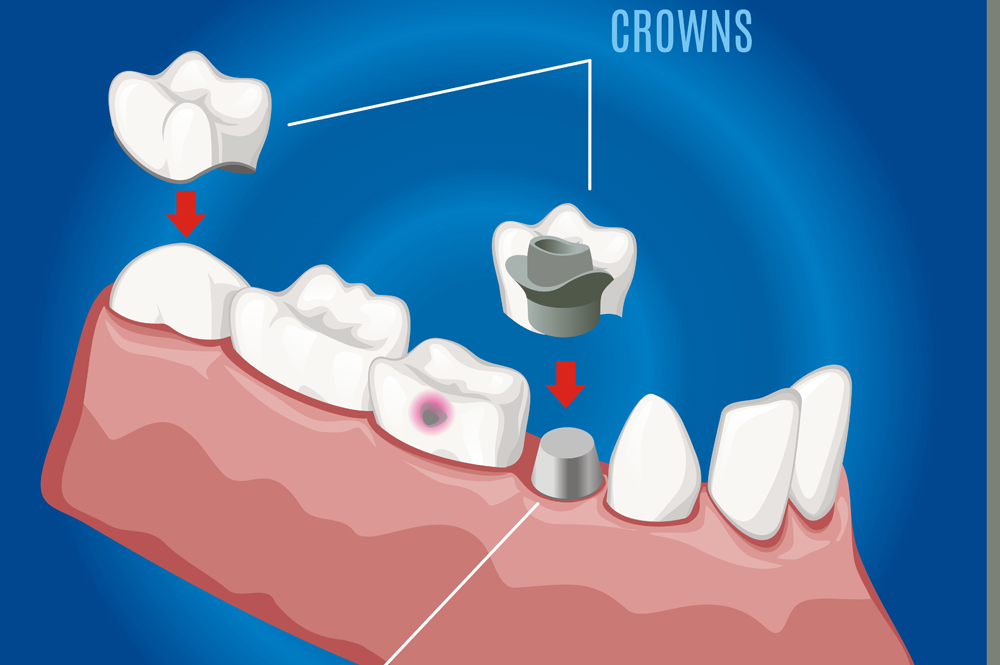
A dental crown (often called a tooth cap) is a custom-made cover that fits over a damaged or weak tooth. It restores the tooth's shape, strength and appearance, and protects what is left of the natural tooth underneath.
A dental bridge replaces one or more missing teeth. An artificial tooth (called a pontic) is held in place by crowns on the healthy teeth on either side of the gap. Unlike a removable partial denture, a bridge is fixed in your mouth, so you can chew and speak with confidence.
A dental bridge fills the gap left by one or more missing teeth by anchoring an artificial tooth (or teeth) to the crowns placed on the teeth on either side of the gap. Bridges restore your ability to chew and speak normally and prevent the remaining teeth from drifting into the space. They offer a fixed, non-removable alternative to partial dentures.
People searching for Smylo Dental & implant dentists can approach the offices of Dr. Abhishek Dubey, Dr. Sandeep Dubey, and Dr. Puja Dubey to get through the analysis and the treatment plan.
Do You Need a Crown or a Bridge?
You may need a crown if you have:
- A tooth that has had a root canal treatment and needs protection
- A cracked, chipped or badly worn tooth
- A large cavity or an old filling that can no longer hold the tooth together
- A discoloured or misshapen tooth that a filling cannot fix
- A dental implant that needs a visible tooth on top
You may need a bridge if you have:
- One or two missing teeth with healthy teeth on both sides of the gap
- Difficulty chewing or changes in your speech because of a gap
- Neighbouring teeth that have started tilting into the empty space
The only way to know for sure is an examination with an X-ray. Your dentist will explain every option before any treatment starts.
Types of Dental Crowns We Offer
| Crown type | Best for | Things to know |
|---|---|---|
| Zirconia | Back and front teeth, patients who want strength and a natural look | Very strong and durable, good for people who grind their teeth |
| All-ceramic / porcelain | Front teeth where appearance matters most | Closest match to natural tooth shade and translucency |
Your dentist will recommend the material based on the tooth's position, your bite, your budget and how visible the tooth is when you smile.
Types of Dental Bridges
- Traditional bridge: crowns on both neighbouring teeth hold the replacement tooth. The most common type.
- Cantilever bridge: supported by a crown on one side only. Used in specific cases.
- Maryland (resin-bonded) bridge: a lighter option, usually for front teeth, that needs less reduction of the neighbouring teeth.
- Implant-supported bridge: held by dental implants instead of natural teeth, ideal when several teeth are missing.
Crown vs Bridge vs Dental Implant: Which Is Right for You?
| Crown | Bridge | Dental implant | |
|---|---|---|---|
| What it does | Covers and protects a damaged tooth | Replaces missing teeth using neighbouring teeth as support | Replaces the missing tooth root and tooth |
| Surgery needed | No | No | Yes, minor |
| Neighbouring teeth affected | No | Yes, they are reshaped to hold the bridge | No |
| Typical lifespan with good care | 10 to 15 years | 10 to 15 years | Often longer |
| Best when | The tooth is still there but weak | Teeth on both sides of the gap are healthy | You want the most natural, long-term replacement |
Not sure which one fits? Book a free consultation and we will explain the options for your mouth, not a one-size-fits-all package.
Our Crown and Bridge Procedure, Step by Step
- Examination and planning: X-rays and a check of your bone level and tooth structure, then a treatment plan and a clear cost estimate.
- Tooth preparation: under local anaesthesia, so you will not feel pain. The tooth is gently reshaped (for a bridge, the two neighbouring teeth are prepared).
- Impression and shade matching: a precise impression or digital scan is taken, and the shade is matched to your natural teeth.
- Temporary crown or bridge: you leave with a temporary restoration while the permanent one is made in the dental laboratory, usually in 5 to 7 working days.
- Permanent placement: we check the fit, bite and appearance, make final adjustments and cement it in place.
How It Works
Examination & Treatment Planning
Your dentist examines the affected teeth with X-rays to assess bone levels and tooth structure, then plans the most suitable crown or bridge design.
Tooth Preparation
For a crown, the tooth is reshaped under local anaesthesia to create space for the crown. For a bridge, the two adjacent teeth are prepared as abutment teeth.
Impression & Shade Matching
A precise impression or digital scan of the prepared teeth is taken. The shade of your crown or bridge is matched to your surrounding natural teeth.
Temporary Restoration
A temporary crown or bridge is placed while your permanent restoration is fabricated in the dental laboratory — typically taking 5–7 working days.
Permanent Placement
The permanent crown or bridge is checked for fit, bite, and aesthetics before being permanently cemented in place. Final adjustments ensure perfect comfort.
Caring for Your Crown or Bridge
- Brush twice a day and clean between teeth daily. For a bridge, use a floss threader, interdental brush or water flosser to clean underneath.
- Avoid biting very hard or sticky foods, ice or pen caps, especially in the first few days.
- If you grind your teeth at night, ask us about a night guard.
- Visit for a check-up every six months so small problems are caught early.
- Some sensitivity for a few days after treatment is normal. If pain, a loose crown or a bad bite continues, contact us.
Frequently Asked Questions
Common questions about Crown and Bridges at Smylo Dental.
With proper care, porcelain or zirconia crowns and bridges typically last 10–15 years. Good oral hygiene, regular check-ups, and avoiding habits like teeth grinding significantly extend their lifespan.
The tooth preparation is done under local anaesthesia, so you will not feel pain during the procedure. Some sensitivity in the treated tooth for a few days afterward is normal.
A veneer covers only the front surface of a tooth and is used primarily for cosmetic purposes. A crown covers the entire tooth and is used when the tooth is structurally compromised or after root canal treatment.
Yes. Once permanently cemented, crowns and bridges restore full chewing function. You may want to avoid extremely hard or sticky foods to protect the restoration's longevity.
Leaving a gap untreated allows adjacent teeth to tilt and opposing teeth to over-erupt into the space over time. This disrupts your bite, makes cleaning harder, and can lead to bone loss in the jaw.
 Whatsapp Us