


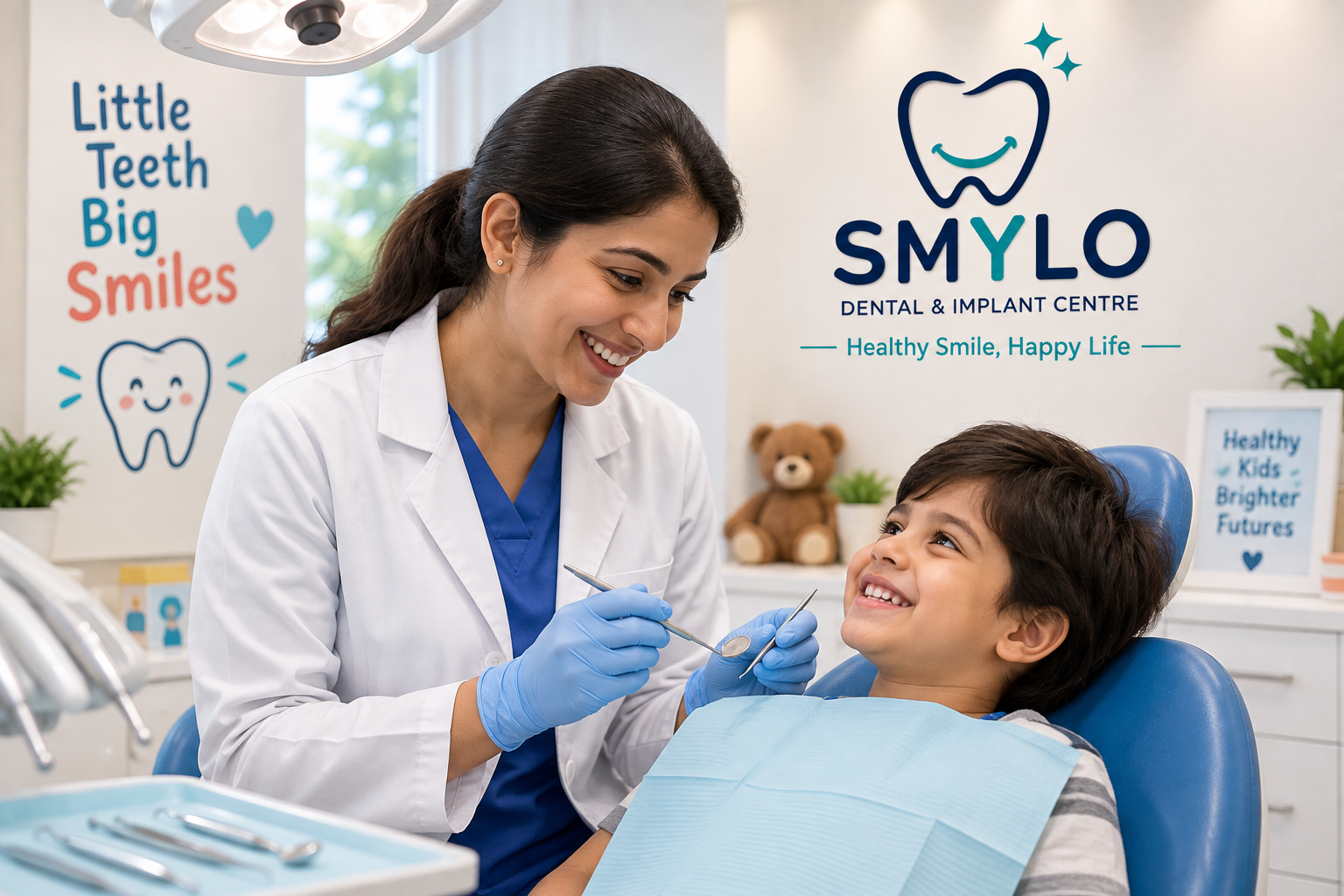
As parents, we want our children to grow up healthy and happy. We pay attention to their nutrition, school, sleep, physical development, and overall well-being—but children's dental health can sometimes be overlooked.
Baby teeth are temporary, but that doesn't mean they are unimportant. Healthy primary teeth help children eat, speak, smile, and maintain proper space for permanent teeth. Dental problems in childhood can also affect a child's comfort and daily activities.
One of the biggest challenges for parents is knowing when a child needs to see a dentist. Children don't always explain their dental symptoms clearly. Sometimes, they may not even realise that something is wrong.
That's why parents should watch for changes in their child's teeth, gums, eating habits, and behaviour.
If you're a parent living in Greater Noida, Noida Extension, Gaur City, Knowledge Park, Pari Chowk, or nearby areas, having access to a child-friendly dental clinic can make regular dental care easier.
Here are 10 important signs that your child may need to see a pediatric dentist.
1. Your Child Complains of Tooth Pain
One of the clearest signs that your child needs a dental examination is persistent tooth pain.
Children may describe dental pain in different ways. They may complain that:
- Their tooth hurts while eating.
- Their tooth hurts when they bite.
- They have pain at night.
- Their jaw or cheek hurts.
- A particular tooth feels uncomfortable.
- They don't want to chew on one side of their mouth.
Tooth pain can have several causes, including cavities, dental infection, damaged teeth, food trapped between teeth, or problems with the gums.
Don't ignore recurring tooth pain.
Even if the pain disappears after a few hours or days, the underlying dental problem may still be present.
A pediatric dentist can examine the affected tooth and identify the cause before the problem becomes more serious.
2. You Notice White, Brown, or Black Spots on the Teeth
Changes in the colour or appearance of your child's teeth can sometimes indicate early tooth decay.
You may notice:
- White chalky spots
- Yellow or brown patches
- Dark spots
- Visible holes
- Rough areas on the tooth
Early cavities don't always cause pain. This is one reason regular dental check-ups are important.
If decay is identified early, treatment may be simpler. If it progresses deeper into the tooth, your child may eventually experience pain or infection.
Parents should make a habit of checking their child's teeth while helping them brush.
A small-looking spot shouldn't automatically be ignored.
3. Your Child Has Sensitivity to Hot or Cold Foods
Does your child suddenly complain when drinking cold water or eating ice cream?
Do they avoid hot foods because a particular tooth hurts?
Dental sensitivity can sometimes be associated with:
- Tooth decay
- Enamel damage
- Cracked teeth
- Gum problems
- Exposed areas of the tooth
- Dental trauma
While occasional sensitivity may not always indicate a serious problem, repeated sensitivity should be evaluated by a dentist.
Children may also avoid certain foods because they associate them with discomfort.
If you notice your child changing their eating habits because of tooth sensitivity, consider scheduling a dental examination.
4. Your Child's Gums Are Red, Swollen, or Bleeding
Healthy gums should generally look pink and should not bleed regularly during brushing.
If your child's gums appear:
- Red
- Swollen
- Tender
- Inflamed
- Bleeding frequently
it may be a sign of gum irritation or inflammation.
One common cause is plaque buildup resulting from inadequate brushing.
However, persistent gum problems may require professional evaluation.
Teach your child to brush gently rather than aggressively. If bleeding continues despite good brushing habits, consult a dentist.
5. Your Child Has Persistent Bad Breath
Bad breath, also known as halitosis, can occasionally happen after eating certain foods or after waking up.
However, persistent bad breath in a child should not be ignored.
Possible dental causes include:
- Poor oral hygiene
- Plaque buildup
- Cavities
- Gum inflammation
- Food trapped between teeth
- Dental infection
Sometimes bad breath can have causes unrelated to the teeth, which is another reason professional evaluation is useful.
If your child's breath remains unpleasant despite regular brushing and cleaning, a dental check-up can help determine the cause.
6. Your Child Has Difficulty Chewing or Eating
Children usually enjoy eating, so a noticeable change in their eating habits can be an important warning sign.
Watch for behaviours such as:
- Avoiding hard foods
- Chewing only on one side
- Refusing certain foods
- Taking longer to eat
- Complaining while chewing
- Avoiding food altogether
Dental pain, cavities, loose or damaged teeth, gum problems, or orthodontic issues can sometimes make chewing uncomfortable.
If your child repeatedly avoids chewing because of discomfort, don't assume they are simply being picky about food.
A dental examination can help identify whether an oral health issue is responsible.
7. A Tooth Is Chipped, Cracked, or Damaged
Children are naturally active. Falls, sports injuries, accidents, and everyday play can sometimes result in dental trauma.
If your child's tooth becomes:
- Chipped
- Cracked
- Loose after an injury
- Discoloured
- Fractured
- Painful after an accident
contact a dentist for an evaluation.
Even if the tooth doesn't appear severely damaged, an injury can sometimes affect the inside of the tooth.
Dental trauma should be assessed promptly, particularly when there is significant pain, bleeding, swelling, or damage to a permanent tooth.
Parents can also consider protective mouthguards for children participating in contact sports.
8. Your Child Is Losing Baby Teeth Too Early or Too Late
Baby teeth naturally fall out as permanent teeth develop. However, the timing and sequence can vary from child to child.
If a baby tooth is lost significantly earlier than expected because of decay or injury, the space may need to be monitored.
On the other hand, if baby teeth remain for longer than expected or permanent teeth appear to be coming in incorrectly, a dental evaluation may be useful.
A pediatric dentist can monitor:
- Tooth eruption
- Spacing
- Jaw development
- Permanent tooth development
- Alignment
Early monitoring can help identify potential orthodontic or developmental concerns.
9. Your Child's Teeth Look Crowded or Misaligned
As children grow, their jaws and teeth go through significant changes.
You may notice:
- Crowded teeth
- Teeth overlapping each other
- Large gaps
- Teeth growing at unusual angles
- Difficulty biting properly
- Upper and lower teeth not meeting correctly
These may be signs that your child could benefit from an orthodontic evaluation.
Not every child with slightly crooked teeth needs braces immediately. However, early assessment allows the dentist to monitor how the teeth and jaw are developing.
Depending on your child's age and dental development, the dentist may recommend observation, preventive care, orthodontic treatment, or referral to an orthodontist.
10. Your Child Is Afraid of the Dentist or Avoids Dental Care
Dental anxiety is surprisingly common among children.
Some children may:
- Cry when they hear about a dental visit.
- Refuse to open their mouth.
- Become anxious before appointments.
- Avoid brushing.
- Be afraid of dental instruments.
- Have a negative reaction after a previous dental experience.
Avoiding the dentist because of fear can allow small dental problems to become larger ones.
A child-friendly dental environment can help children become more comfortable with dental visits.
Parents can also help by using positive language around dentistry and avoiding statements that may increase fear.
Instead of saying:
"Don't worry, it won't hurt."
try explaining that the dentist is going to check their teeth and help keep their smile healthy.
Positive dental experiences during childhood can help establish better oral health habits later in life.
When Should Your Child First Visit a Dentist?
Parents sometimes wait until their child's first permanent teeth appear before scheduling a dental appointment.
However, dental care should begin much earlier.
The first dental visit is generally recommended around the time the first tooth appears or by the child's first birthday.
Early dental visits allow the dentist to:
- Check tooth development
- Identify early signs of decay
- Assess oral hygiene
- Guide parents on brushing
- Discuss diet and dental health
- Monitor jaw and tooth development
- Help the child become comfortable with dental visits
Regular visits can then be scheduled according to the child's individual needs.
How Can Parents Prevent Dental Problems in Children?
Prevention starts at home.
Encourage Twice-Daily Brushing
Help your child brush their teeth twice a day using an age-appropriate toothbrush and fluoride toothpaste as recommended by their dentist.
Young children may need parental assistance because they often cannot brush effectively on their own.
Limit Sugary Snacks and Drinks
Frequent consumption of sugary foods and drinks can increase the risk of tooth decay.
Encourage healthier snack choices and avoid allowing children to constantly sip sugary beverages throughout the day.
Don't Put a Child to Bed With a Sugary Drink
Frequent exposure to milk, juice, or other sugary drinks during sleep can increase the risk of early childhood tooth decay.
Encourage Regular Dental Visits
Don't wait for your child to experience pain before visiting the dentist.
Regular check-ups help detect problems early.
Protect Teeth During Sports
If your child participates in contact or high-impact sports, ask a dentist whether a properly fitted mouthguard would be appropriate.
Why Pediatric Dental Care Is Important
Children's dental care isn't simply about preventing cavities.
Healthy teeth can support:
- Proper chewing
- Clear speech development
- Healthy nutrition
- Normal jaw development
- Confidence when smiling
- Proper spacing for permanent teeth
Taking care of baby teeth also helps children develop good oral hygiene habits that can continue into adulthood.
Choosing a Pediatric Dentist in Greater Noida
When selecting a pediatric dentist in Greater Noida, consider more than just the clinic's location.
Look for a dental clinic that provides:
- Child-friendly dental care
- Experienced dental professionals
- A comfortable environment
- Proper sterilisation and hygiene
- Preventive dental guidance
- Modern diagnostic facilities
- Clear communication with parents
- Appropriate treatment planning
A positive dental experience can help your child feel more comfortable with future appointments.
Frequently Asked Questions
What are the signs that my child needs a dentist?
Common signs include tooth pain, cavities, sensitivity, swollen or bleeding gums, persistent bad breath, difficulty chewing, damaged teeth, abnormal tooth eruption, crowded teeth, and dental anxiety.
At what age should children visit a dentist?
Children should generally have their first dental visit around the time their first tooth appears or by their first birthday.
Are baby teeth really important?
Yes. Baby teeth help children chew and speak and maintain space for permanent teeth. They should be cared for even though they eventually fall out.
How often should children visit the dentist?
Many children benefit from dental check-ups approximately every six months, but the ideal frequency depends on their individual oral health and risk factors.
What should I do if my child's tooth is knocked out?
A knocked-out permanent tooth is a dental emergency. Contact a dentist immediately for guidance and seek urgent dental care. Treatment options depend on the child's age and whether the tooth was a baby or permanent tooth.
How can I help my child overcome dental fear?
Use positive language, avoid sharing frightening dental experiences, explain visits in simple terms, and choose a child-friendly dental environment.
Conclusion
Your child's smile deserves attention from the very beginning.
Tooth pain, cavities, sensitivity, bleeding gums, bad breath, difficulty chewing, damaged teeth, and changes in tooth development should not be ignored. Early dental evaluation can help identify problems before they become more complicated.
Regular pediatric dental visits also give parents professional guidance about brushing, nutrition, fluoride, tooth eruption, and overall oral development.
If you're looking for kids' dental care in Greater Noida, consider scheduling a consultation when you notice any of these warning signs—or simply to establish a preventive dental routine.
Smylo Dental & Implant Center
At Smylo Dental & Implant Center, we believe that good dental habits start early. Our team provides dental care designed around the needs of children and families, with a focus on prevention, comfort, and healthy smiles.
From routine dental check-ups and cleanings to treatment for cavities and other dental concerns, professional guidance can help your child develop a positive relationship with dental care.
Healthy Smile, Happy Life.
Book a dental consultation for your child today. - https://smylodental.com/kids-dentistry
Book Your Appointment
We'll confirm your appointment at the earliest
 Whatsapp Us